
In recent years, scientific research has profoundly changed the way we interpret the relationship between nutrition, metabolism, and inflammation. Today, we know that many chronic and functional disorders do not depend solely on nutritional deficiencies or excesses, but rather on a more complex interaction between the immune system, blood sugar regulation, inflammation, and lifestyle. Nutrition, in fact, is not only a valuable tool for prevention, but also helps resolve even complex clinical conditions.
From this evolution comes Recaller Program, the new GEK Lab product line that integrates inflammatory and metabolic biomarkers, clinical data, and personalized nutrition into a progressive pathway built around the individual.
One line, three levels of in-depth analysis
Recaller Program is structured as a progressive pathway, allowing users to choose the most suitable level based on symptoms, goals, and the desired degree of in-depth analysis.


It is the first level of the pathway and analyzes the relationship between nutrition and inflammation, identifying the food groups that, when consumed in excess or with little variety, may contribute to a physiological imbalance.
What it identifies:
- the level of food-related inflammation
- the major food groups that define the Personal Food Profile
What is obtained:
- a medical report based on laboratory data
- a personalized nutrition plan aimed at reducing inflammation
- Nutritional and scientific support
Indicated in cases of:
- digestive disorders, IBS, abdominal bloating, constipation, acid reflux
- recurrent or allergic dermatitis, acne
- recurrent headaches without a clear etiology
- hair loss and brittle nails

The intermediate level: metabolism and glycation
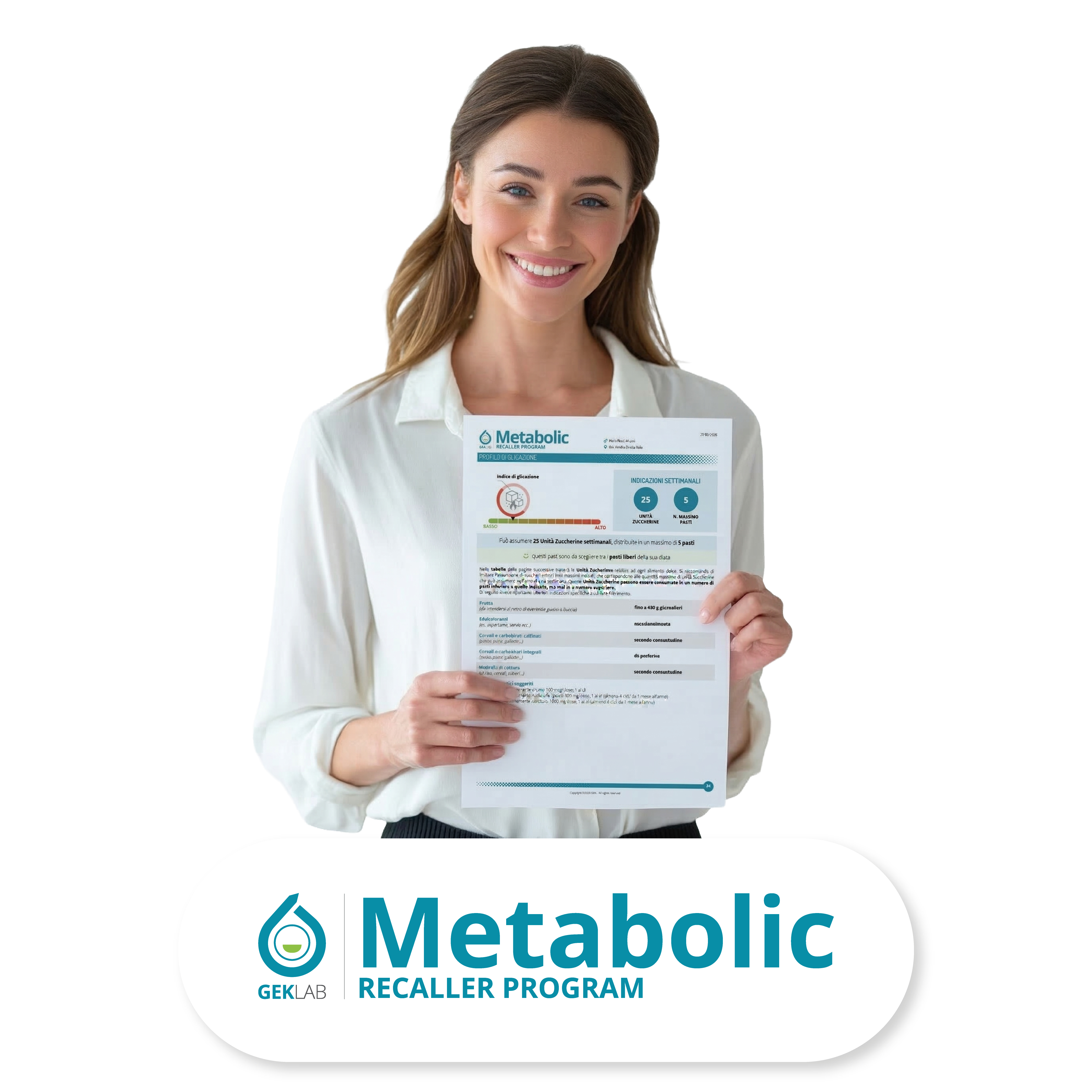
It integrates the analysis of food-related inflammation with metabolic and glycation biomarkers, providing a more comprehensive view of how the body manages sugars and energy.
What it identifies:
- the level of food-related inflammation
- the major food groups of the Personal Food Profile
- biomarkers related to glycation and metabolic stress
- the Personal Glycation Profile
What is obtained:
- an integrated medical report on inflammation and metabolism
- Personalized nutritional recommendations for metabolic rebalancing
- Nutritional and scientific support
Indicated in cases of:
- difficulty losing weight and overweight
- metabolic alterations and high cholesterol
- persistent chronic fatigue and energy drops
- fatty liver disease (hepatic steatosis) and insulin resistance
- autoimmune thyroiditis

The advanced level: full personalization, genetics, and nutritional counseling
It is the most comprehensive level, integrating inflammation, metabolism, and genetic predisposition, offering an advanced view of the individual’s inflammatory and metabolic status.
What it identifies:
- the level of food-related inflammation
- the major food groups of the Personal Food Profile
- biomarkers related to glycation and metabolic stress
- the Personal Glycation Profile
- genetic predisposition to obesity, fatty liver disease, overweight, and autoimmunity
What is obtained
- an advanced medical report based on biomarkers and genetics
- a highly personalized nutritional program
- Nutritional and scientific support
- 30-minute video consultation with a nutritionist
Indicated in cases of:
- immune-mediated and autoimmune diseases
- polycystic ovary syndrome (PCOS) and insulin resistance
- fertility support
- fibromyalgia
- healthy aging and metabolic optimization
From diagnosis to personalized intervention
What distinguishes Recaller Program is its integrated approach: each level does not simply focus on measurement, but translates clinical data and biomarkers into concrete, personalized nutritional recommendations.
The goal is not to eliminate foods, but to scientifically modulate the diet, helping the body reduce inflammation and restore metabolic balance.
A continuously evolving model
Recaller Program represents the natural evolution of GEK Lab’s research: a dynamic model that grows alongside science and translates into increasingly precise and useful tools in everyday clinical practice.
Because the future of personalized medicine is not about accumulating data, but about transforming it into concrete, sustainable interventions truly tailored to the individual.