
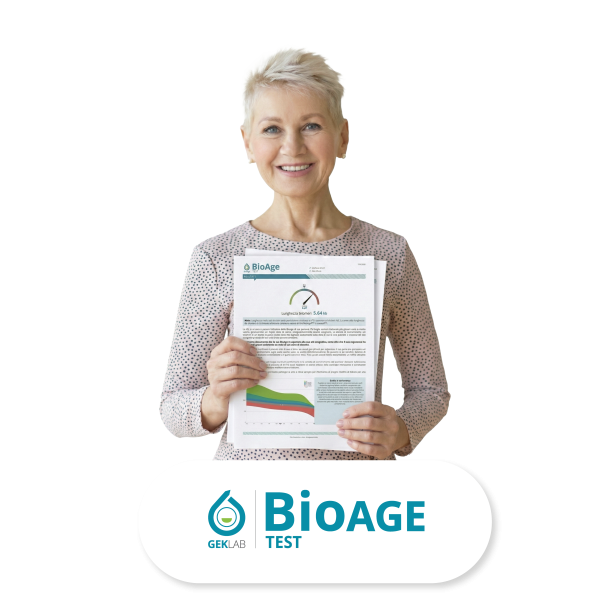
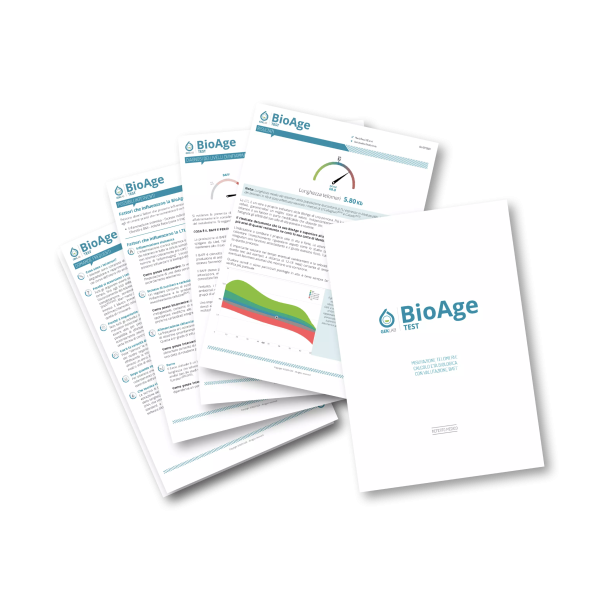
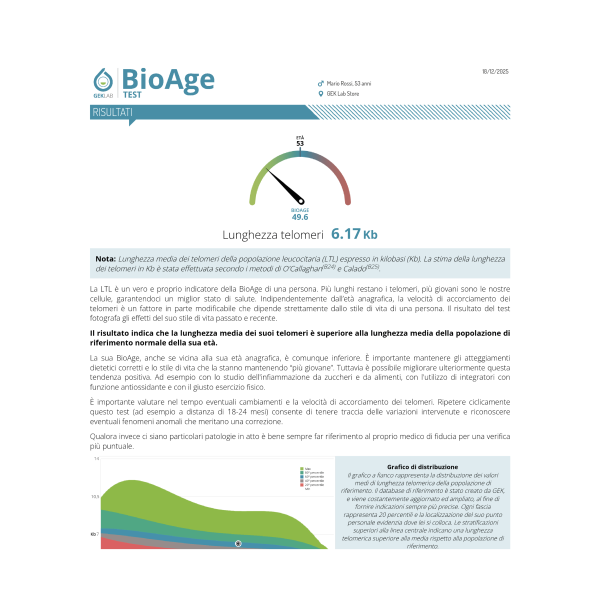


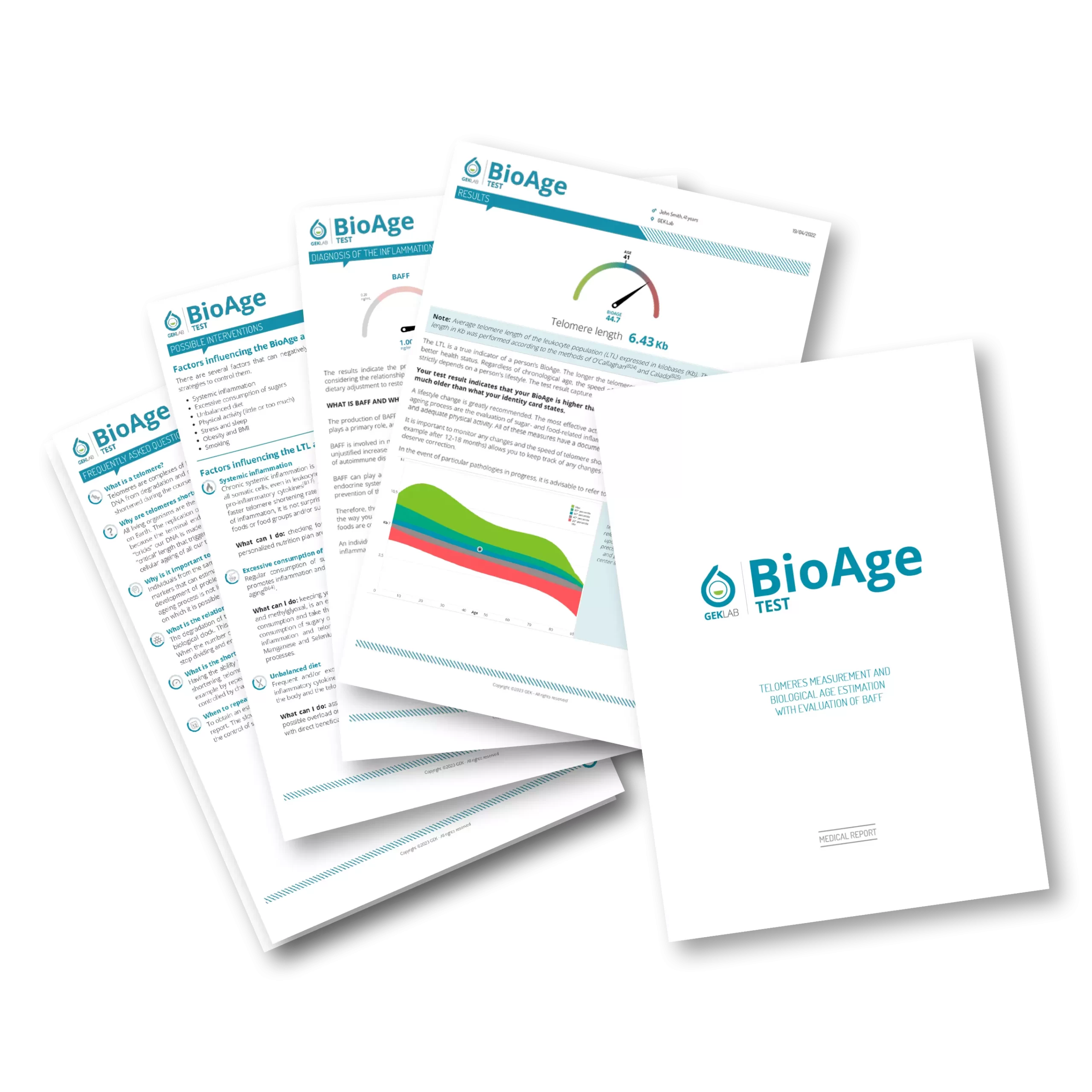
- Your BioAge: an interpretative index of your biological age
- Average length of leukocyte telomeres in kilobases (kb)
- Comparison between your result and the population average
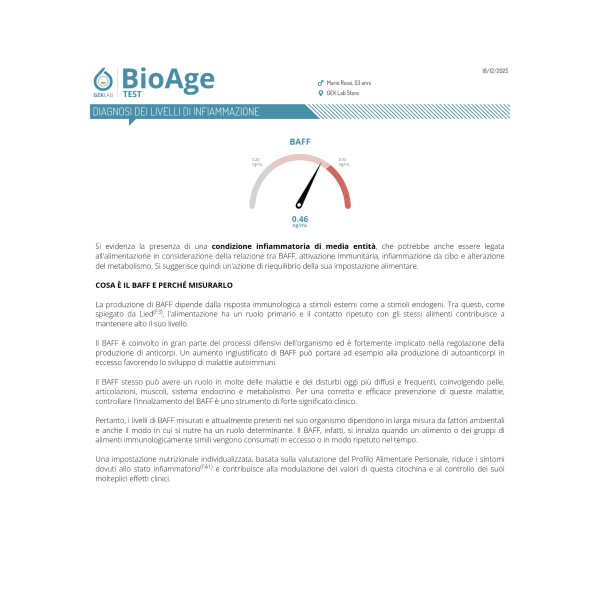
- Measurement of your BAFF inflammatory level, also correlated with daily food intake (food-related inflammation).
- Medical interpretation of laboratory data
- 6 months of free access to MyGEK Lab service, a scientific consulting service that provides a collection of frequently asked questions and direct contact with a team of nutritionists
- Scientific insights and frequently asked questions: to better understand the factors that influence your BioAge and how you can slow down the aging process.

How GEK Lab products work
FAQ
Telomeres are the ends of chromosomes and they serve the function of protecting DNA from random damage during cell replication. Physiologically, telomeres shorten over time; however, chronic stress, influenced by lifestyle and imbalanced nutrition, accelerates telomere shortening. This results in telomeres becoming less effective in carrying out their protective function, leading to premature aging and an increased risk of developing conditions such as diabetes.
Knowing one’s biological age is important because it provides a more accurate assessment of health status and disease risk compared to chronological age. While chronological age simply represents the number of years since birth, biological age reflects the physical and physiological state of the body, including aging processes and overall level of well-being. Knowing one’s biological age allows individuals to adopt more targeted preventive measures, adjusting their lifestyle, diet, and physical activity to maintain and improve long-term health.
Telomere shortening is a physiological process that occurs in our bodies as we age. However, this process can be accelerated by various factors: the presence of chronic stress, persistent inflammation, and an inadequate lifestyle, including unhealthy eating habits. Certainly, chronic inflammation and oxidative stress related to glycation processes and an imbalanced diet can significantly contribute to the speed of telomere shortening. Consequently, progressive telomere shortening has been associated with cellular aging and increased susceptibility to age-related diseases. Maintaining a healthy lifestyle, managing stress, and adopting a balanced and personalized diet are essential for protecting telomeres and preserving cellular health and overall organism health over time.
BioAge, resulting from the interpolation of scientific, demographic, and biological data, estimates the biological and cellular aging of the body, differing from chronological age, which simply counts the years since birth. Cellular aging is a natural process, but various lifestyle factors such as balanced diet, physical activity, adequate rest, and avoiding harmful behaviors can positively influence BioAge. The goal is to maintain a consistent or younger biological age compared to chronological age through healthy lifestyle choices and habits. Understanding this difference can guide lifestyle changes and suggest personalized approaches to slow down cellular aging.
BioAge is assessed by measuring the average length of telomeric DNA in leukocytes. Telomeres are the terminal part of each chromosome that protects their ends from shortening due to time, aging, and oxidation effects. Telomere length in leukocytes (LTL) is determined by comparing these chromosomal segments with a gene of known length. As highlighted by an increasing number of scientific studies, telomere shortening is a physiological process; however, if accelerated, it can be a sign of premature cellular aging. The test provides the patient with a synthetic interpretative index, BioAge, calculated by interpolating the patient’s demographic and biological data with a reference statistical sample.