
Hepatic Steatosis (Fatty Liver)
Prevention and treatment
Hepatic steatosis, or fatty liver disease, is the most common liver condition in the world. One in three adults is affected.

- It is a condition in which fats (triglycerides) accumulate in liver cells.
- It can lead to more serious diseases such as cirrhosis, liver failure, and an increased risk of liver cancer.
- SolitameIt usually does not cause symptoms in the early stages.
- It can cause fatigue, digestive difficulties, nausea, and difficulty losing weight (related to metabolic syndrome).
- For a long time, it was believed to depend on a diet high in fats
- Today we know that it is mainly caused by an excess of sugars, particularly excessive consumption of fructose
- Individuals carrying a mutation in the PNPLA3 gene are more predisposed to hepatic steatosis.
- High levels of methylglyoxal, a biomarker of oxidative stress in the body, are associated with the development of hepatic steatosis
If you suffer from obesity or overweight, or if there are cases of fatty liver and diabetes in your family, prevent silent liver damage with Metabolic Recaller Program.
Address it with the Metabolic Recaller Program
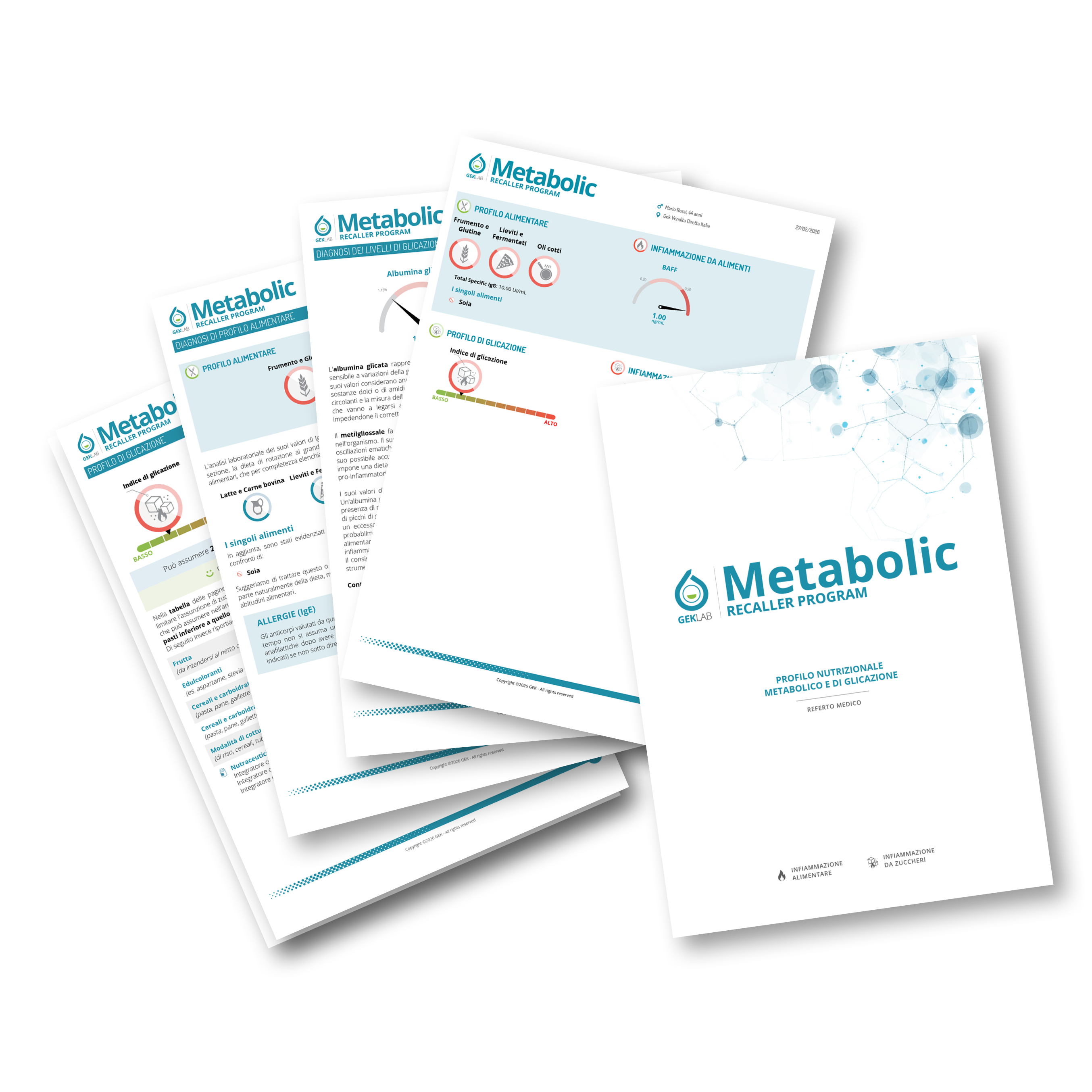
Simple test, clear results
- The level of the body’s inflammatory state related to foods (BAFF)
- The inflammatory state related to sugars (glycated albumin and methylglyoxal).
- The body’s excessive exposure to specific classes of foods (IgG).
- If you are consuming an excess of sugars and certain classes of foods.
- Check your low-grade inflammatory state
- How and by how much to limit sugars and rotate, in a controlled way, the foods that cause latent inflammation throughout your week.






How does it work in practice?
Fill out the form and you will conveniently receive your personal kit at home, with everything you need to perform the test
The kit contains a clear, illustrated guide. The sample collection is simple, quick, and non-invasive: it only takes a few minutes
NellaIn the package, you will find a prepaid envelope for free sample pickup. We take care of everything.
In about 7 days, you will receive a complete medical report by email, highlighting the food groups that contribute to inflammation. Along with the report, you will also receive personalized dietary advice to improve your diet and address the symptoms.
Frequently Asked Questions
Yes. The test was developed by GEK Lab and is performed in their own laboratory. It is based on innovative and clinically validated markers, selected from the most recent scientific evidence. The test does not merely detect generic antibodies but measures the individual inflammatory response to specific food groups, providing a much more accurate and useful analysis for those suffering from chronic disorders such as cistitis. The Recaller Medical Program is currently used by doctors and nutritionists throughout Italy to personalize dietary therapies with a scientific, safe, and validated approach.
No, a medical prescription is not required.
The test can be ordered directly online and will be conveniently delivered to your home, along with all the instructions to collect the sample easily and safely.
However, if you are under the care of a doctor or nutritionist, you can share the test results with them to integrate the data into your treatment plan.
The report is clear, detailed, and designed for clinical use as well.
Methylglyoxal and glycated albumin are early indicators of metabolic alterations that precede the development of diseases such as fatty liver, diabetes, and dyslipidemia. They can signal these issues when they are still in an early stage and more easily reversible.
Sugar-induced inflammation is an inflammatory condition fueled by an individually excessive intake of sugars and substances that behave similarly (such as alcohol, but also fruit sugars and even sweeteners). These substances can bind to proteins or other circulating molecules in the body, altering their structure and impairing their function. This process, known as glycation, leads to increased levels of glycated albumin and to the production of methylglyoxal, a free radical capable of oxidizing body tissues, promoting inflammation and insulin resistance. Both markers are measured in our report to assess the damage that sugars (and related substances) may cause.