
Dermatitis
Understanding it better to truly manage it.
Skin reactions are often linked to an inflammatory state, which can be managed through proper nutrition.

- Inflammation of the skin that can appear in various forms (e.g., atopic dermatitis, psoriasis, rosacea, dyshidrosis)
- Redness, itching, and skin irritation
- Possible lesions, scaling, or blisters depending on the type
- Symptoms that can flare up or worsen due to internal and external factors
- Increased skin inflammation also related to food.
- Excessive and repeated consumption of certain types of foods, which can contribute to the symptoms.
- Multifactorial causes involving dysbiosis, immune system dysfunctions, and environmental factors.
- Excess sodium in the diet
Your dermatitis may depend on food-related inflammation.
Address it with the Food Recaller Program
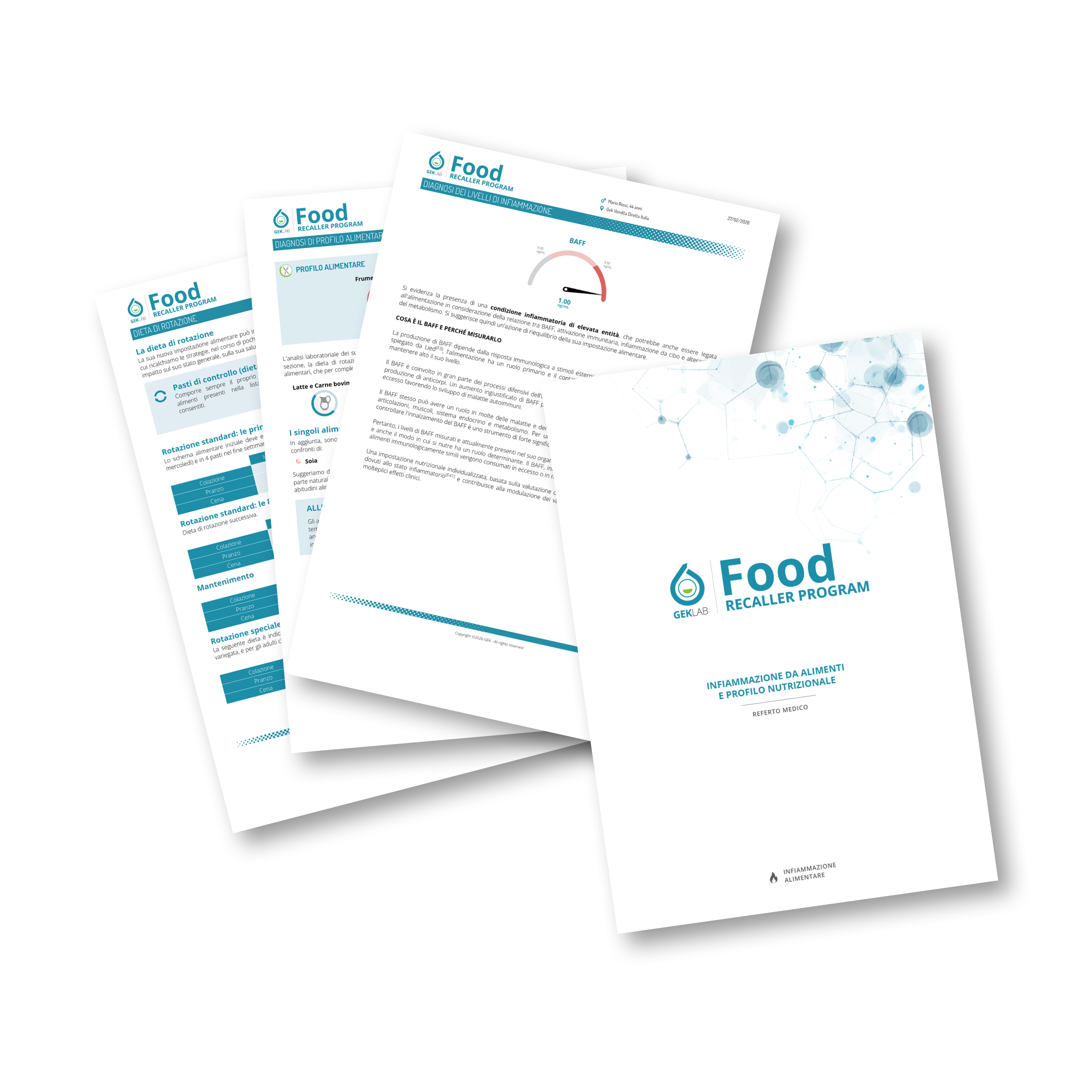
Simple test, clear results
- The inflammatory state also related to diet.
- Excessive exposure of the body to specific classes of foods (IgG), such as cooked oils and those containing nickel
- The level of the body’s inflammatory state related to foods (BAFF)
- If you are consuming an excess of certain foods
- If this excess is responsible for a latent inflammatory state that can trigger and sustain dermatitis
- How to limit sugars and rotate foods in your weekly diet to combat inflammation and resolve your dermatitis
- Improvement of symptoms
- Better skin quality and reduced risk of worsening acne, rosacea, and dermatitis
- Helps stabilize blood sugar levels, preventing spikes that can exacerbate skin reactions
- If your diet is too heavily skewed toward sugars or carbohydrates
- If there is a latent inflammatory state caused by sugars or by excessive or repeated consumption of certain foods






How does it work in practice?
Fill out the form and you will conveniently receive your personal kit at home, with everything you need to perform the test
The kit contains a clear, illustrated guide. The sample collection is simple, quick, and non-invasive: it only takes a few minutes
In the package, you will find a prepaid envelope for free sample pickup. We take care of everything.
In about 7 days, you will receive a complete medical report by email, highlighting the food groups that contribute to inflammation. Along with the report, you will also receive personalized dietary advice to improve your diet and address the symptoms.
Frequently Asked Questions
Yes. The test was developed by GEK Lab and is performed in their own laboratory. It is based on innovative and clinically validated markers, selected from the most recent scientific evidence. The test does not merely detect generic antibodies but measures the individual inflammatory response to specific food groups, providing a much more accurate and useful analysis for those suffering from chronic disorders such as cistitis. The Recaller Medical Program is currently used by doctors and nutritionists throughout Italy to personalize dietary therapies with a scientific, safe, and validated approach.
No, a medical prescription is not required.
The test can be ordered directly online and will be conveniently delivered to your home, along with all the instructions to collect the sample easily and safely.
However, if you are under the care of a doctor or nutritionist, you can share the test results with them to integrate the data into your treatment plan.
The report is clear, detailed, and designed for clinical use as well.
No. The personalized medical report you will receive after the test will suggest a rotation diet (and never an elimination diet) that you can follow over the course of the week to help manage your dermatitis and prevent relapses, based on your inflammatory status.
Food-related inflammation is an inflammatory condition linked to an individually excessive intake of food groups. In particular, it is possible to identify dietary excesses related to wheat and gluten, cooked oils, nickel, yeasts and fermented substances, milk, and beef. Food-related inflammation is a condition that may coexist with the only two properly defined intolerances (enzymatic lactose intolerance and celiac disease).